
Louis XIV and the Savonnerie
A Savonnerie Carpet: A luxurious, hand-knotted wool pile rug originating from a famous French manufactory established in the 17th century. Unlike other carpets named for their regions of origin, the workshop started in 1627 on the site of an old soap factory (savon) in Paris,
which gave the carpets their name.
In 1668 King Louis XIV of France commissioned the largest carpet ever woven. The Paris based Savonnerie manufactory led the job proposing 92 individual pieces of carpet. Once completed the carpet was intended to cover the full span of the Grand Galerie in the Louvre. The project took over 20 years, and the rugs were never even placed; the king switching his priorities to Versailles. During the Revolution many were stripped of their royal emblems and gifted or sold for other homes.
The MET is hosting the first ever American exhibition on the Savonnerie; A Kings Carpet. The exhibit is comprised of a selection of fragments alongside four complete carpets. I addition, visitors will be able to observe textile conservators at work in an in gallery temporary conservation studio as they repair and strengthen one of these monumental textiles.
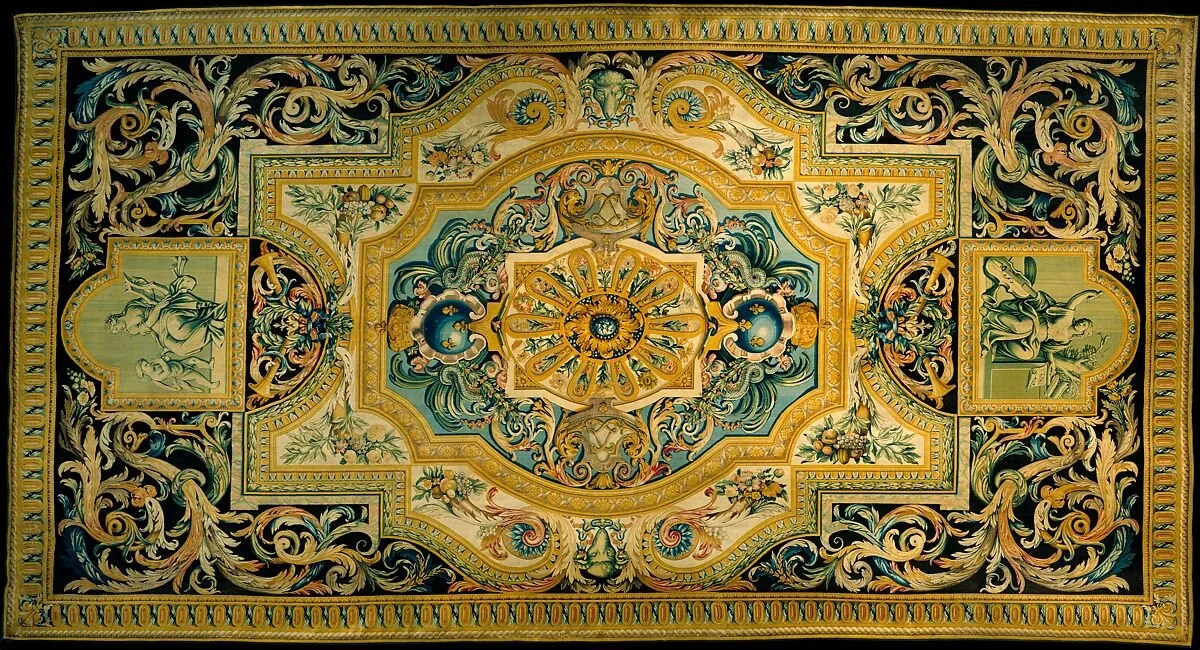
The iconography revolves around the subject of music. Images of low-relief sculpture represent Euterpe, the muse of music, and Erato, the muse of erotic lyrical poetry, who is accompanied by a cupid playing the trumpet.
Photo provided by The MET.
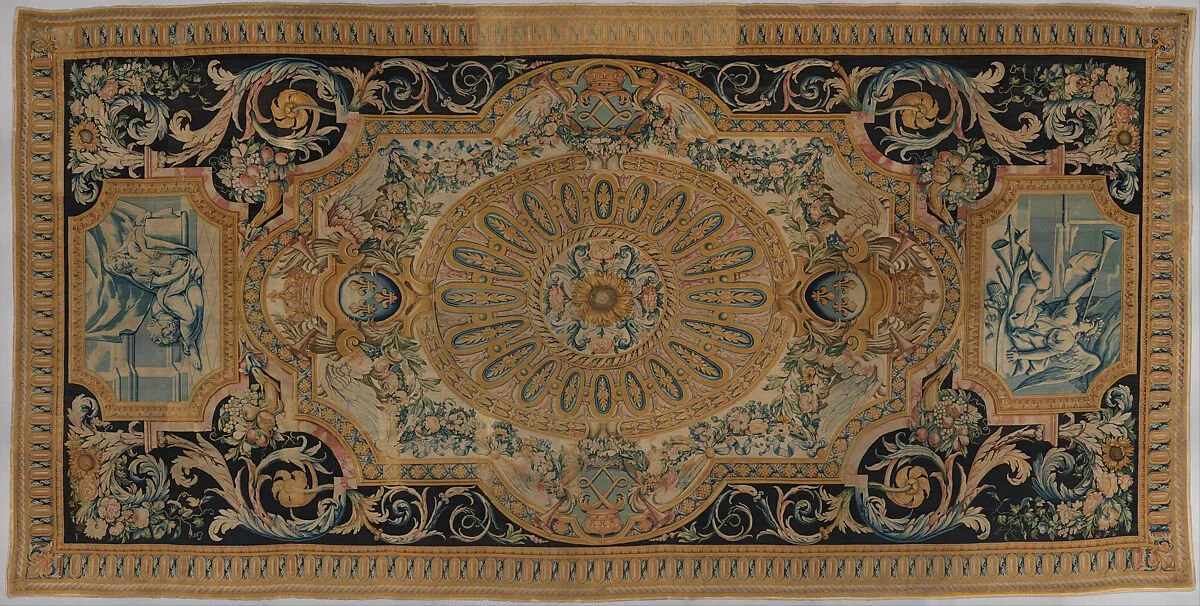
This is the first of the Grande Galerie carpets ever brought to the United States.
Photo provided by The MET
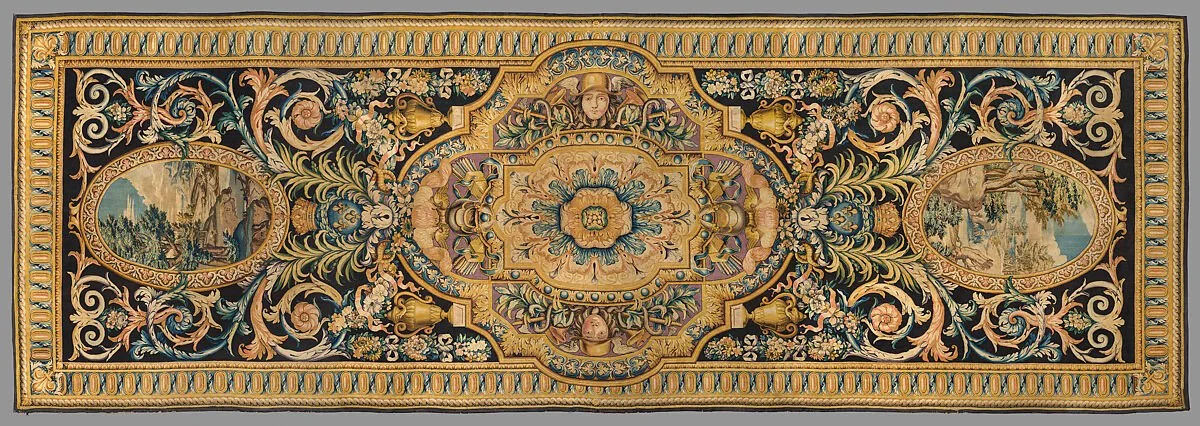
Charles Le Brun’s design sequence alternated narrower carpets featuring landscapes at each end, such as this one, and wider carpets with depictions of allegorical bas-reliefs.
Photo provided by The MET.